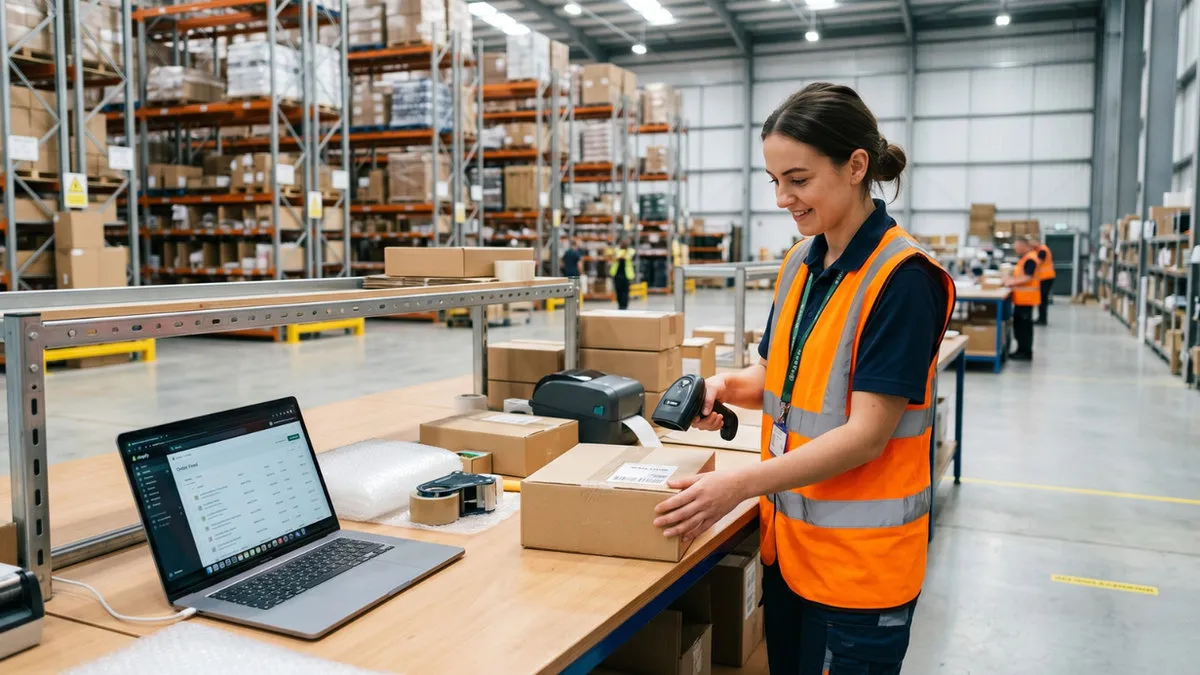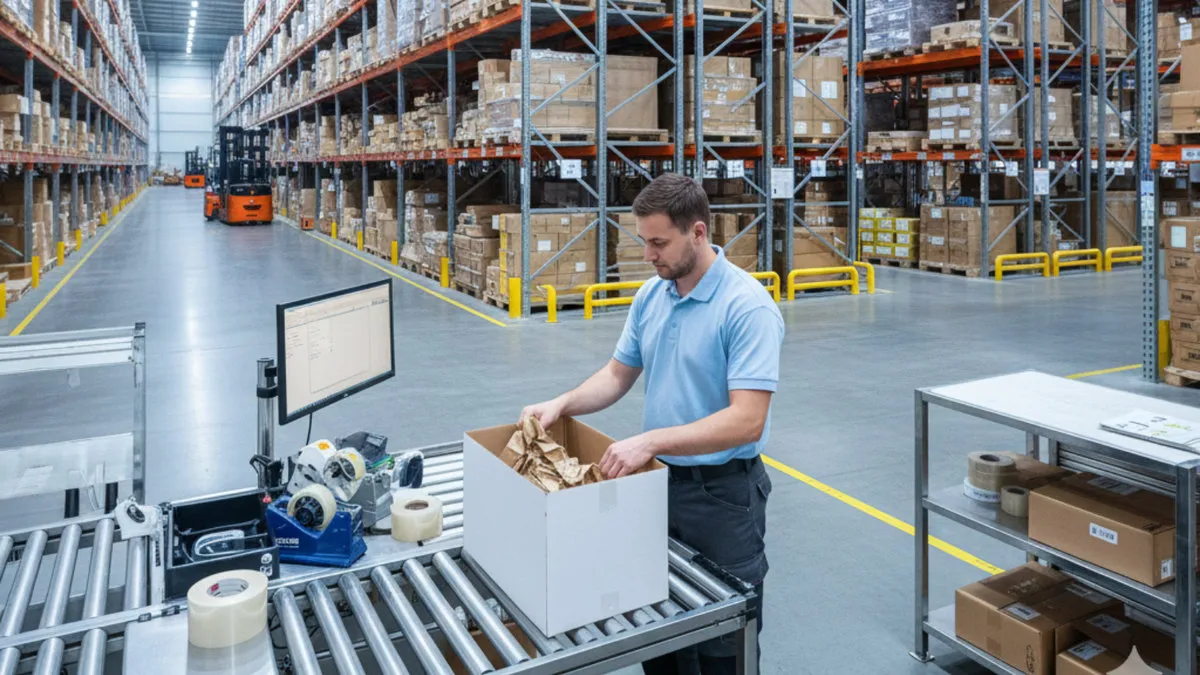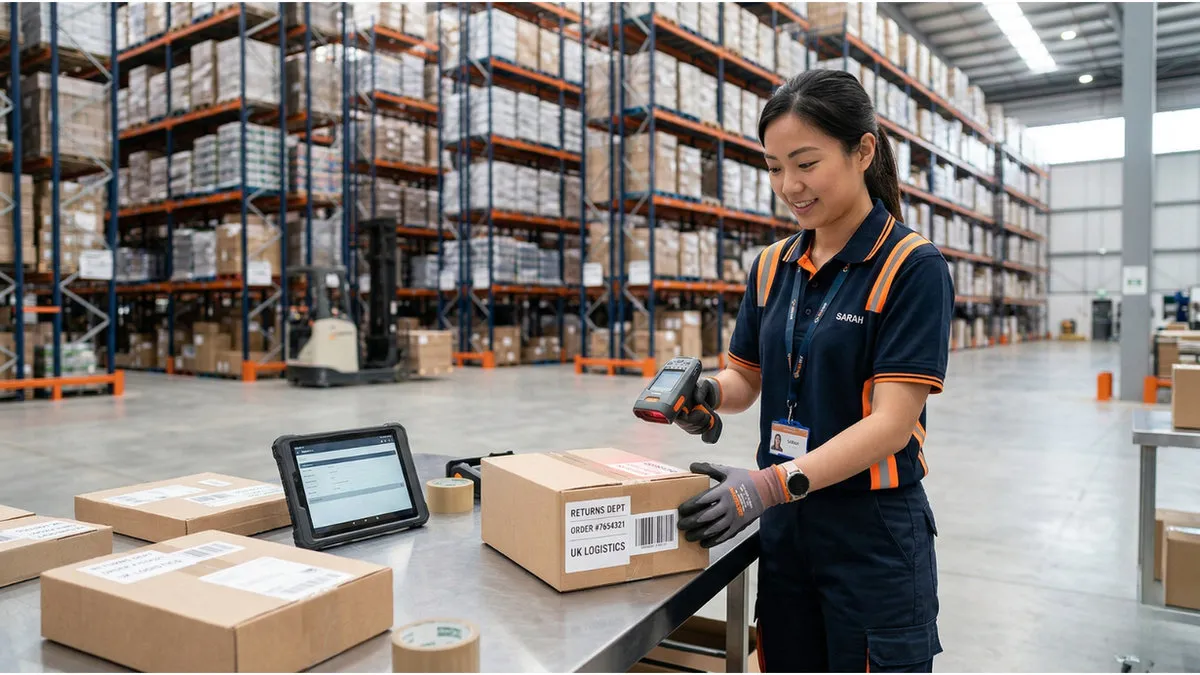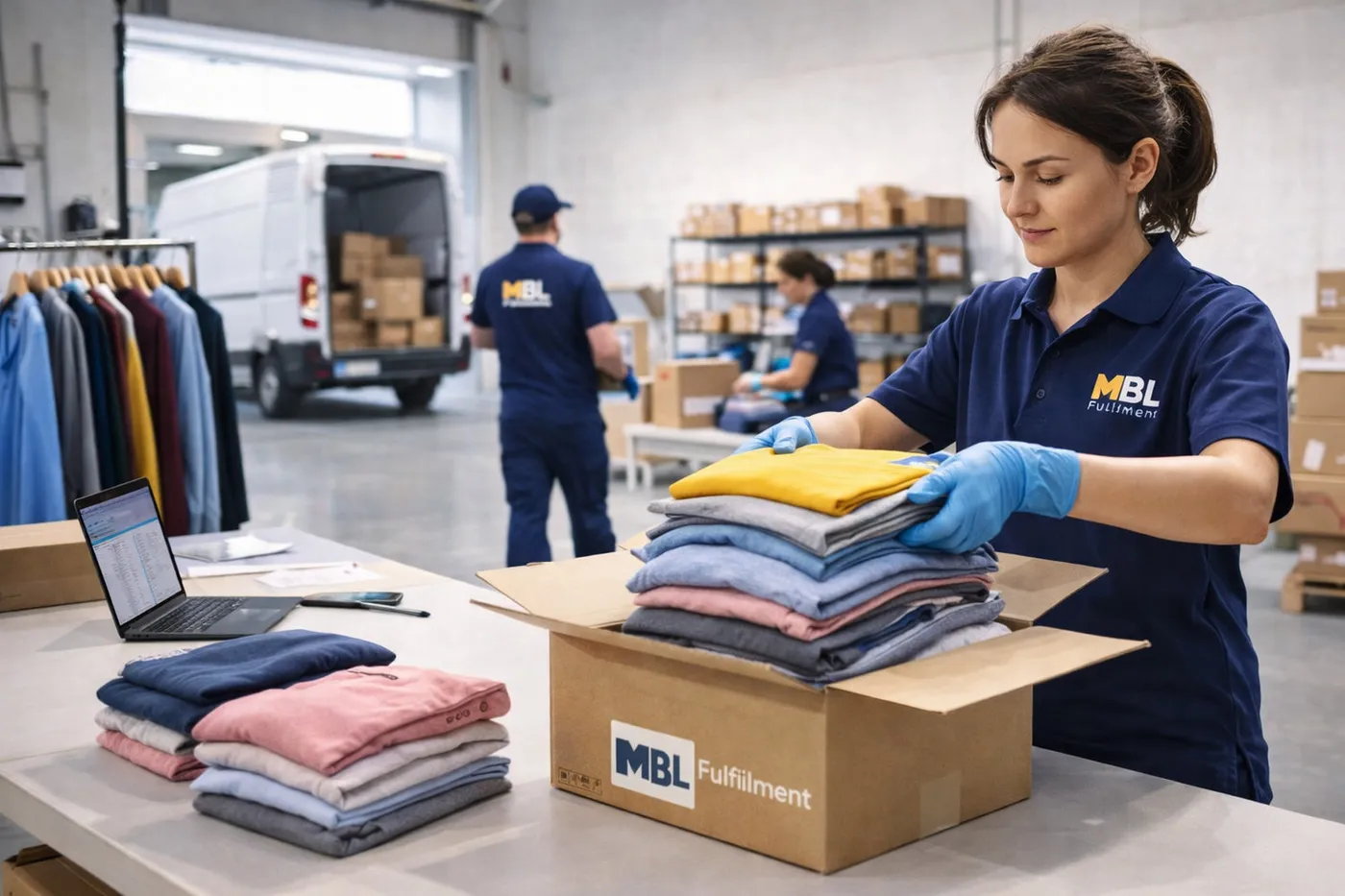
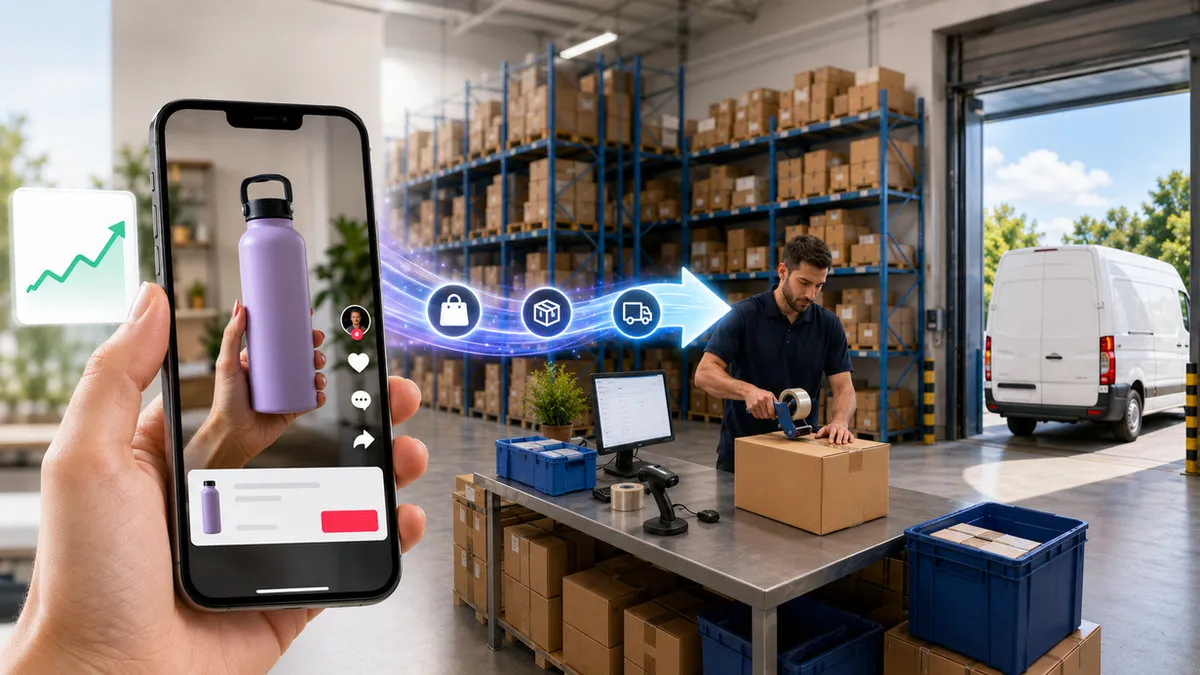
From viral demand to dispatched orders.
Why TikTok Shop Is Reshaping Ecommerce Fulfilment for UK Sellers
Ecommerce fulfilment has always had to keep pace with how people shop — but TikTok Shop has changed the rhythm entirely. Instead of steady, predictable demand, sellers face sudden, video-driven spikes: a product that normally sells in a trickle can start moving several times faster within a day of a clip taking off. How large that spike gets depends on the product, the creator, and how much stock you have. But whatever volume you can actually fulfil, the warehouse behind it has to dispatch it quickly, accurately, and in sync across every channel.
TikTok Shop launched in the UK in 2021 and has grown into one of the fastest-moving sales channels in British e-commerce. It blends content, discovery, and checkout into a single in-app experience, so buying happens on impulse — often within seconds of someone seeing a product for the first time. For sellers, that's a huge opportunity. For their logistics, it's a stress test — and one the platform actively scores, penalising overselling and late dispatch.
This guide explains how TikTok Shop fulfilment really works for UK sellers: what the platform actually penalises (and what it doesn't), how real-time ecommerce fulfilment integration keeps every order in sync, and how to choose a partner built to scale with an unpredictable channel. Whether you're already live or planning your first launch, getting fulfilment right is what turns a viral moment into lasting growth rather than a logistics crisis.
What Makes TikTok Shop Fulfilment Different?
TikTok Shop fulfilment is different because demand is driven by content, not by predictable buying cycles. Unlike a Shopify storefront or an Amazon listing — where traffic builds steadily through search and advertising — TikTok Shop sales are triggered by individual videos that can go viral at any moment, with little warning and no reliable way to forecast volume.
That single difference cascades into everything downstream:
- Demand is spiky, not smooth. A product can sit quietly for weeks, then sell a sudden surge of units in a short window — as long as the stock is there to meet it.
- Speed expectations are high. TikTok buyers are impulse shoppers who expect fast dispatch, and they judge the brand — not the platform — when something goes wrong.
- Performance is measured and enforced. TikTok Shop tracks seller metrics such as on-time dispatch and cancellations. Consistently weak fulfilment can reduce a shop's visibility or trigger penalties.
- Stock accuracy is critical. TikTok Shop is usually one of several channels a brand sells on, so overselling a product across platforms is a real and costly risk.
Setting up a TikTok Shop is easy — listing products, linking videos, and taking payment all happen in the app. What the platform doesn't solve is the physical side: storing stock, picking and packing accurately, dispatching on time, and handling returns. It's the same operational challenge every growing brand faces, only compressed into days rather than months, leaving little time to react on either supply or dispatch. The brands that succeed treat both inventory planning and fulfilment as part of their strategy from the start.
The Viral Spike Problem — and Where Fulfilment Actually Fits
A genuine viral moment on TikTok can lift a product's sales well above its normal run rate. That much is real and documented. The honest questions are how big these spikes usually are, and what actually breaks when they happen.
The Headline Cases Are the Rare Exception
A handful of viral moments become famous precisely because they're extreme. After going viral on TikTok, mochi ice cream brand Little Moons saw sales rise by 700% in a single week at Tesco. Skincare brand Peter Thomas Roth was forced to ramp up production of an eye cream after a testing video passed 50 million views. A viral "feta pasta" recipe was even blamed for a global shortage of feta cheese.
These cases are genuine — but they're the small minority that get written up, not the norm. And notice the constraint in each: Tesco's supply chain, a manufacturer ramping production, a cheese shortage. At this extreme, the bottleneck is supply and production, not the warehouse, and the response is a whole-business reorganisation — manufacturing, sourcing, customer service, working capital. Fulfilment is only one part of coping with a once-in-a-business hit, and it would be dishonest to pretend otherwise.
The Everyday Reality Is a Few-Fold Increase — and That's Where Fulfilment Decides
For most TikTok Shop sellers, a good video doesn't trigger a 700% week. It produces a far more ordinary spike: sales multiplying several times over for a few days. A brand can usually hold enough inventory to cover a spike of that size, so running out often isn't the problem. What breaks at this scale is the operation around the stock you have:
- Orders you can fulfil ship late because there aren't enough hands to pack them.
- Available stock oversells on TikTok because it wasn't synced after selling on Shopify or Amazon.
- Packing errors climb under pressure, pushing up returns and complaints.
- Slow dispatch drags down your TikTok metrics, costing you visibility just as momentum builds.
None of those are stock problems — they're logistics problems. So which wall hits first depends on the size of the spike: at a moderate, few-fold spike (the common case), fulfilment is the deciding factor; at an extreme, headline-grade spike (the rare case), stock and production are the first wall. Good fulfilment doesn't claim to absorb an unlimited spike — it makes sure that, whatever volume you can supply, logistics is never the thing that lets you down. That's a ceiling outsourced ecommerce fulfilment raises well beyond what one or two people packing by hand can reach.

Extreme spikes test stock. Everyday spikes test fulfilment.
How Real-Time Fulfilment Integration Protects You From Penalties
This is where organised fulfilment earns its place on TikTok Shop. Integrated ecommerce fulfilment means your warehouse system connects directly to TikTok Shop — and every other channel you sell on — so orders flow in automatically, stock updates in real time, and tracking reaches customers without anyone touching a spreadsheet. On a channel that penalises overselling and late dispatch, that real-time connection isn't a convenience; it's your main defence against the two things TikTok Shop actually punishes.
Accurate Stock Means You Never Oversell-and-Cancel
Overselling is the quiet killer of a TikTok Shop's metrics. Most sellers list the same products on Shopify, Amazon, or eBay at once, so a spike on TikTok can drain stock those channels still show as available — or vice versa. Without real-time sync, your stock count drifts out of date, customers buy what you no longer have, and you're forced into the seller-fault cancellations the platform penalises.
Real-time inventory sync removes that risk by treating stock as a single shared pool: the moment a unit sells anywhere, every channel — including TikTok Shop — knows. When real stock hits zero, the listing switches to out of stock at the right moment, stopping orders cleanly rather than accepting ones you'd have to cancel. That's the heart of it — accurate sync turns a potential cancellation penalty into a harmless, penalty-free out-of-stock. It matters all the more because there can be a several-hour lag between a catalogue updating and the wider system reflecting it, and real-time sync keeps that danger window as small as possible.
Fast, Automated Dispatch Keeps Late Dispatch Low
The same integration protects your dispatch metric. An order reaches the warehouse system automatically the moment it's placed — rather than sitting unseen in an inbox — so picking, packing, and dispatch happen within hours, comfortably inside the two-business-day window, with carrier labels generated automatically and tracking pushed straight back to TikTok Shop. A staffed operation processing orders to a consistent SLA is what keeps late dispatch comfortably under threshold even when volume jumps. You can see how this multi-channel connectivity works on our fulfilment technology page.
What Does TikTok Shop Actually Penalise?
TikTok Shop runs a formal seller performance system, and understanding exactly what it does and doesn't penalise is the key to the whole channel — because the most common worry is the wrong one.
Running Out of Stock Is Not Penalised — Overselling Is
If a product genuinely sells out, the listing switches to "out of stock" and stops taking orders. TikTok Shop does not penalise you for sales it never let a customer place. A small brand that goes viral, sells its entire stock, and shows out of stock has done nothing wrong in the platform's eyes — it has simply run out, which is a supply problem, not a fulfilment failure.
What is penalised is the gap between your real stock and what TikTok Shop thinks you have. If your count is wrong — usually because it wasn't updated after selling on another channel — customers order stock you don't hold, and you have to cancel. The platform doesn't punish you for being out of stock; it punishes you for accepting orders you can't fulfil.

Running out isn't penalised — overselling and shipping late are.
The Metrics That Matter
Exact thresholds change over time, so always confirm current figures in the TikTok Shop Seller Centre, but the structure is consistent:
- Late Dispatch Rate (LDR) — orders must be handed to the carrier (and scanned) within the dispatch window, generally two business days. Sellers are expected to keep LDR low (commonly at or below 4%); past roughly 10%, enforcement starts.
- Seller-Fault Cancellation Rate (SFCR) — the share of orders cancelled by the seller, typically expected to stay under 2.5%. This is the metric overselling hits directly.
- Order Defect Rate — covering returns, complaints, and other signals of a poor buyer experience.
How Enforcement Works
In the UK (alongside the US, France, and Germany), TikTok Shop uses an Account Health Rating (AHR): you hold a pool of points and violations deduct from it, with deactivation at zero. A separate violation points system can lead to temporary suspension at higher levels and permanent closure at the top threshold. In practice, weak fulfilment metrics bring reduced visibility, Order Volume Limits (a cap on orders, imposed exactly when cancellations show you can't fulfil reliably), extended settlement periods that hold your cash longer, and ultimately suspension.
There's a vicious circle here: poor metrics lead to longer settlement and order caps, which reduce available cash, which makes it harder to restock and ship fast, which worsens metrics further. Organised fulfilment — fast dispatch and accurate real-time stock — is how you stay out of that spiral. The metrics TikTok enforces are, almost entirely, fulfilment metrics, so your fulfilment setup decides whether the system works for you or against you.
How Does TikTok Shop Connect to Your Warehouse?
TikTok Shop connects to a fulfilment operation through your 3PL's order management technology, which links your sales channels to the warehouse so orders, stock, and tracking move automatically. How many channels that technology supports, and how quickly it syncs, directly determines how well you can scale.
At MBL Fulfilment, this connectivity comes through our partnership with Diamond Logistics and its Despatchlab platform, which connects to over 60 marketplaces and 40 carriers — including TikTok Shop alongside Amazon, eBay, Shopify, and WooCommerce. The strategic advantage isn't TikTok Shop in isolation; it's running it as one channel within a unified operation. A brand might sell on its own Shopify store, reach buyers on Amazon, and ride viral discovery on TikTok Shop, all fulfilled from the same Manchester warehouse with one shared pool of stock. Adding TikTok Shop doesn't mean a whole new logistics headache — it just means switching on another connection.

One stock count. Every channel synced. No overselling.
A common worry is that moving fulfilment to a 3PL will interrupt trading at the worst time. In practice, a good partner onboards in stages: receiving and booking in your inventory, connecting channels one by one, and running test orders before going fully live — so the switch is invisible to customers. For a TikTok seller, the ideal time to do this is before the next spike, so the infrastructure is proven and ready when demand arrives.
Returns and Customer Experience on TikTok Shop
Returns matter more on TikTok Shop than on almost any other channel, because so much buying happens on impulse. A shopper who buys within seconds of seeing a video hasn't researched the product the way a search-led buyer has, so a higher share of orders come back — particularly in fashion and beauty, where fit, shade, and expectation play a big role. That isn't a flaw in the channel; it's how it sells. The brands that win treat returns as part of the experience, not an afterthought.
A strong returns operation protects both the customer relationship and your platform metrics by:
- Processing returns quickly, so refunds are prompt and order defect rates stay low.
- Inspecting and restocking sellable items fast, putting popular products back into available stock while demand is still high.
- Quarantining damaged goods and feeding returns back into stock levels, so the same real-time sync that prevents overselling also reflects returned units.
This has a direct revenue angle. A returned unit stuck in a backlog is stock you can't resell while a product is still hot — every item in an unprocessed return pile is a missed sale during exactly the window when every unit counts. And a smooth, easy returns process is one of the strongest ways to convert a one-time viral buyer into a repeat customer, often choosing a different size rather than leaving for good. Professional returns management turns what feels like a cost into both a retention tool and a way to keep available inventory high.
What to Look for in a TikTok Shop Fulfilment Partner
Because TikTok Shop punishes weak fulfilment so quickly, choosing the right 3PL is one of the most important decisions a growing seller makes. When evaluating a partner, focus on these capabilities — and ask for specifics, not vague reassurance:
- Direct TikTok Shop integration with real-time stock sync, not a daily batch.
- Surge capacity — space, staff, and courier capacity to absorb a sharp, sudden rise in orders.
- Fast dispatch — same-day and next-day options to keep your dispatch rate high during a spike.
- Multi-channel support — TikTok Shop alongside Shopify, Amazon, and eBay from one shared stock pool.
- No minimum order volumes — so you can start small and scale without volume lock-ins.
- Returns handling — a proper reverse-logistics process built for higher-return categories.
Why Carrier Choice and Courier Experience Matter
One factor that's easy to overlook is how a fulfilment partner handles delivery. Through the Despatchlab platform, MBL Fulfilment connects to over 40 carriers — including DPD, DHL, Royal Mail, Evri, and Parcelforce — and selects the best one automatically by destination, weight, and dimensions, so you're never tied to a single courier's cut-off times, capacity, or pricing when volume spikes. That choice is backed by genuine courier-side experience: as part of MBL Group, we also run MBL Logistics, which works for many of the UK's largest couriers as a delivery partner within their networks — the same carriers available through Despatchlab — so we understand how that delivery network performs under pressure, not just how to book it.
Common TikTok Shop Fulfilment Mistakes to Avoid
Most TikTok Shop fulfilment failures come down to a handful of avoidable mistakes — usually made because a brand scaled its marketing faster than its logistics:
- Treating fulfilment as an afterthought — and only fixing it during the first spike, the worst possible time, rather than before it.
- Relying on manual, in-house packing for too long — then losing customers and metrics during a rushed move to a 3PL once already overwhelmed.
- Ignoring stock sync across channels — almost guaranteeing the overselling and seller-fault cancellations that the platform penalises.
- Choosing a partner on price alone — the cheapest quote often hides slow sync, limited dispatch, or no surge capacity, exactly the weaknesses that fail under pressure.
The common thread is building marketing for scale while leaving fulfilment built for a hobby. The fix is to put an operation in place that's already designed for volume and volatility before you need it — so a viral moment becomes a milestone rather than a crisis. If you're weighing up the move, our guide on when to outsource ecommerce fulfilment walks through the signs that a brand is ready.
Frequently Asked Questions
What is TikTok Shop fulfilment?
TikTok Shop fulfilment is the process of storing inventory, picking and packing orders, and dispatching them to customers who buy through TikTok Shop. Because sales are driven by viral video content, fulfilment must handle sudden demand spikes, fast dispatch deadlines, and real-time stock updates — often across multiple sales channels at once.
Does running out of stock get my TikTok Shop penalised?
No. If a product genuinely sells out, the listing switches to "out of stock" and simply stops taking orders — TikTok Shop doesn't penalise you for sales it never let a customer place. What does get penalised is overselling: when your stock count is inaccurate, customers order items you can't supply, and the cancellations that follow hurt your Seller-Fault Cancellation Rate. Real-time inventory sync prevents this by keeping your stock count accurate across every channel.
How fast does fulfilment need to be for TikTok Shop?
TikTok Shop measures Late Dispatch Rate, so orders generally need to be handed to the carrier within about two business days to keep your shop in good standing. Same-day and next-day dispatch capability gives the safest margin, especially during demand spikes when slow fulfilment would otherwise damage visibility and customer trust.
Can I use a 3PL to fulfil TikTok Shop orders?
Yes. A third-party logistics (3PL) provider can connect directly to TikTok Shop, import orders automatically, and dispatch on your behalf — providing the surge capacity, fast dispatch, and real-time stock sync needed to handle viral spikes without overselling or shipping late. At MBL Fulfilment this runs through the Despatchlab platform via our Diamond Logistics partnership, connecting to over 60 marketplaces including TikTok Shop.
Why do TikTok Shop sellers get higher return rates?
TikTok Shop buying is impulse-driven — shoppers often buy within seconds, with less research than on search-led platforms. This naturally leads to more returns, especially in fashion and beauty. A fast, well-organised returns process keeps refunds prompt, protects your metrics, and turns one-time buyers into repeat customers.
Do I need a minimum number of orders to outsource TikTok Shop fulfilment?
Not with every provider. MBL Fulfilment has no minimum order volumes, so you can start fulfilling TikTok Shop orders from day one and scale as demand grows — useful on a channel where volumes can jump from modest one week to several times that the next.
Building Ecommerce Fulfilment That's Ready for TikTok Shop
TikTok Shop rewards brands that can turn a viral moment into a wave of well-handled orders, and quietly penalises those whose logistics let them down. Its speed, its performance metrics, and its impulse-driven buying all point to the same conclusion: ecommerce fulfilment isn't a back-office detail on TikTok Shop — it's part of whether the channel works for you at all.
The brands that thrive plan their inventory so a spike can actually be met — because no warehouse can ship stock that doesn't exist — and then make sure logistics never becomes a second bottleneck on top of supply. They sort fulfilment before the spike, run TikTok Shop as one channel within an integrated operation, keep stock synced in real time to avoid overselling, dispatch fast enough to protect their metrics, and treat returns as a retention tool.
That's what MBL Fulfilment is built to provide: from a Manchester hub, technology connecting to over 60 marketplaces including TikTok Shop and a choice of 40+ carriers, same-day and next-day dispatch options, real-time inventory visibility, and no minimum order volumes. If TikTok Shop is part of your growth plan, it's worth getting fulfilment right before the next spike arrives. Get in touch with MBL Fulfilment to talk through how integrated, scalable fulfilment can keep up with whatever your next viral moment delivers.
Sources
- TikTok Shop — Wikipedia
- TikTok Made Me Buy It — World Finance
- TikTok Shop — Late Dispatch Rate Requirements (Seller Centre)
- TikTok Shop — Seller-Fault Cancellation Rate Requirements (Seller Centre)
- TikTok Shop — Seller Enforcement Policy (Seller Centre)
- Office for National Statistics — Internet sales as a percentage of total retail sales (UK)